Branding transforms an ordinary mug into a powerful marketing tool. Whether it’s for retail, hospitality, or corporate gifting, the method of decoration defines not only the product’s look but also its durability and perceived quality. Understanding how different branding techniques work helps buyers choose the right process for their target market and budget.
🎨 1. Decal Transfer Printing
Decal transfer is the most versatile and widely used branding method for ceramic mugs. The process involves printing artwork on a special decal paper, applying it to the mug surface, and firing it in a kiln. The heat fuses the image into the glaze, making it dishwasher- and scratch-resistant.
This method supports full-color, gradient, and photographic prints, making it ideal for premium retail collections or corporate identity programs. Buyers who work with professional Custom Ceramic Mugs Manufacturers can customize decal positions precisely according to dieline guidelines—ensuring consistent logo placement across thousands of units.
🖨️ 2. Pad Printing
Pad printing (also called tampography) transfers ink from a silicone pad onto curved or uneven surfaces. It’s excellent for logos with up to four solid colors and smaller designs like text or icons.
Pad printing is cost-efficient for short runs and ideal for promotional mugs. However, it doesn’t achieve the same color depth or resolution as decals. It’s also less durable under industrial dishwashing, so it’s best suited for retail or limited-use gifting.
🧵 3. Screen Printing
Screen printing applies color directly through a mesh stencil onto the mug surface. Each color requires a separate screen, making it better for simple designs with clear lines.
Because the ink layer is thicker, screen-printed mugs have a slightly raised texture that adds tactile value. This method is ideal for large production runs where the same design repeats—like chain café logos or souvenir series.
Factories such as Ceramic Mug Manufacturers often use automated screen-printing lines, ensuring uniform alignment and reducing cost per unit for wholesale orders.
💎 4. Laser Engraving
Laser engraving uses high-intensity beams to etch directly into the mug’s glaze or metal surface, producing a permanent, elegant mark. On ceramic mugs, lasers remove thin layers of glaze to reveal the clay base beneath, creating a subtle, tone-on-tone finish.
This process has no color limitations—it relies on contrast and depth. It’s favored by luxury brands and corporate clients seeking minimalist design. Unlike printed logos, engraving never fades or peels off, making it perfect for premium gifting programs and high-end hospitality venues.
🌈 5. Reactive and Specialty Glazes
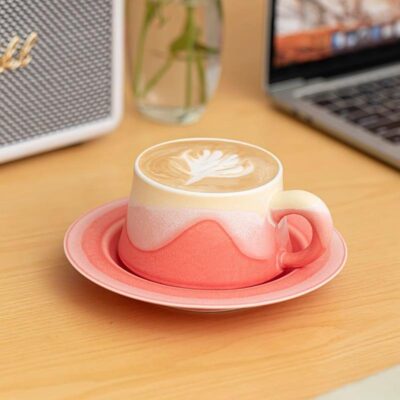
Reactive glaze branding doesn’t rely on traditional printing at all—it’s achieved by applying special glaze mixtures that react under heat to create unique patterns and color gradients. Each piece becomes slightly different, giving it an artisanal appeal.
These glazes can be combined with embossed logos or engraved stamps for subtle branding. The result is a visually striking mug that blends craftsmanship with brand storytelling. Many buyers use reactive glazes for limited-edition or boutique retail collections, where individuality adds value.
⚙️ Choosing the Right Method
Each branding method has trade-offs in cost, durability, and visual impact. Here’s a comparison:
| Method | Durability | Color Range | MOQ Suitability | Market Segment |
|---|---|---|---|---|
| Decal Transfer | High | Full-color | Medium–High | Retail / Corporate |
| Pad Printing | Medium | 1–4 colors | Low–Medium | Promotions / Events |
| Screen Printing | High | 1–3 colors | High | Hospitality / Chain Stores |
| Laser Engraving | Very High | Monochrome | Low–Medium | Luxury / Gifting |
| Reactive Glaze | High | Variable | Medium | Boutique / Artisanal |
Buyers can mix methods strategically—for example, combining decal logos with reactive finishes or engraving with printed branding to create distinct product tiers within one collection.
🧪 Testing and Quality Assurance
After branding, mugs undergo durability testing:
-
Dishwasher simulation (250+ cycles) for decal and screen-printed logos.
-
Abrasion resistance using friction pads or cloth tests.
-
Heat and moisture exposure to confirm print adhesion.
Factories document these results as part of their quality assurance protocols, ensuring brand designs remain consistent across production runs and distribution cycles.
🧩 Customization for Market Differentiation
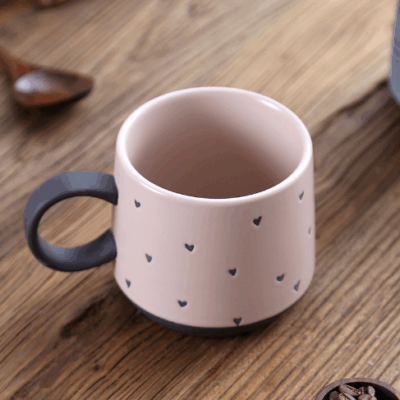
Modern buyers increasingly seek multi-process customization, combining color glazes, handle contrasts, and embossing with traditional printing. OEM programs often start with a dieline—mapping logo area, handle orientation, and glaze finish—to achieve seamless integration of design and structure.
By coordinating with skilled suppliers, brands can shorten their lead times while ensuring repeatable quality across regional markets. This holistic approach turns branding into a competitive advantage rather than just decoration.
🏁 Final Thoughts
Choosing the right branding method depends on how your mugs will be used, displayed, and perceived. Decals deliver color brilliance, lasers convey elegance, and reactive glazes express individuality. The best projects often blend multiple techniques to create a design language that feels exclusive and memorable.
Partnering with professional custom ceramic mugs suppliers ensures that your brand’s artwork is translated into durable, premium-quality mugs—each one reinforcing your identity sip after sip.