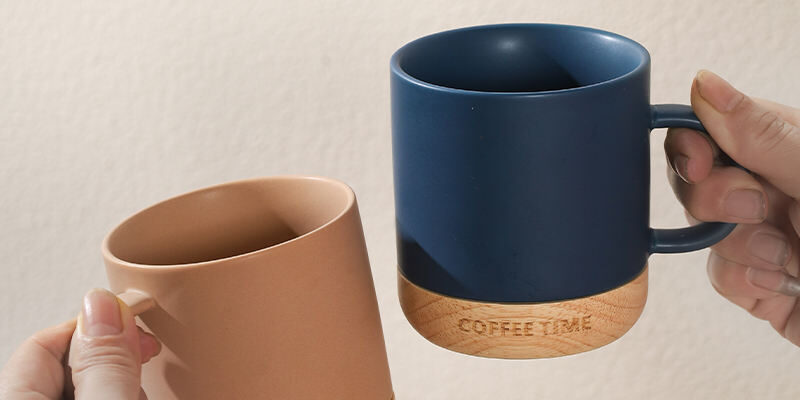
When you pick up a mug, you might not think about its balance or handle geometry—but manufacturers certainly do. Behind every comfortable, easy-to-hold ceramic mug is a carefully engineered design process that considers grip strength, hand span, balance, and surface texture. For buyers and brand developers, understanding handle ergonomics ensures not only user satisfaction but also product longevity and safety in daily use.
✋ Why Handle Ergonomics Matter
The handle is the direct interface between user and product. Poorly designed handles can cause wrist fatigue, unsteady pouring, or even breakage during use. For cafés, hotels, and promotional brands, this directly impacts customer experience and brand reputation.
Professional Ceramic Mug Manufacturers treat handle design as both an art and a science—optimizing geometry to distribute the mug’s weight evenly and minimize strain on the user’s fingers.
⚙️ Key Ergonomic Parameters
-
Grip Diameter: Ideal mug handles accommodate 2–3 fingers comfortably. A diameter of 28–35mm suits most adult hand spans.
-
Angle and Orientation: The handle should align with the mug’s center of gravity. Angles between 45° and 60° provide better wrist alignment and pouring stability.
-
Surface Texture: Smooth glazes look elegant but can become slippery when wet. Semi-matte finishes improve grip without losing visual appeal.
-
Handle-Body Distance: Adequate clearance prevents users from touching the hot mug wall, maintaining comfort and safety.
Each of these parameters is verified through iterative prototyping and physical testing before molds are finalized.
🧩 Material and Structural Integrity
Handle ergonomics go hand-in-hand with structural strength. The connection point between the handle and the mug body must be reinforced with the same clay mixture to ensure consistent shrinkage during firing.
High-quality mugs use single-piece casting rather than post-attached handles. This process enhances durability and eliminates weak joints. OEM factories also run stress tests—applying downward force on the handle to simulate real-world use and prevent detachment under pressure.
🧪 Comfort and Grip Testing Protocols
Factories that specialize in ergonomic design conduct structured comfort tests:
-
Dynamic Grip Test: Simulates lifting and rotating motions to measure wrist and finger pressure.
-
Balance Index Assessment: Evaluates how evenly the mug distributes weight when filled.
-
Thermal Comfort Test: Ensures handle temperature remains below 45°C when the mug contains hot liquid.
-
Extended Use Simulation: Repeatedly grips and releases the handle to assess surface wear and fatigue points.
Such data helps refine future mold designs and supports product documentation for professional buyers who prioritize functional design.
🎨 Design Variation by Market Segment
Different markets prefer different handle aesthetics and ergonomics:
| Market Type | Handle Style | Key Feature |
|---|---|---|
| Hospitality (Hotels & Cafés) | Compact Oval | Space-saving, easy stacking |
| Retail & Gifting | Sculpted or Oversized | Stylish and visually distinctive |
| Outdoor / Travel | Loop Handle | Better stability during movement |
| Office & Corporate | Rounded C-Handle | Classic comfort for daily use |
By aligning handle style with usage scenario, brands can improve both comfort and perceived product quality.
🧼 Coating and Grip Finishes
Handle comfort isn’t just about shape—it’s also about finish. Many modern OEM designs apply soft-touch glazes or matte coatings that improve tactile feedback. These coatings enhance grip security even when the mug is wet from condensation or washing.
Some factories experiment with dual-texture glazing, combining glossy exteriors for aesthetics with micro-matte handles for functional grip—ideal for premium retail lines.
🚀 Testing Ergonomics in OEM Projects
When developing OEM collections, buyers should request ergonomic mockups before approving final molds. These clay prototypes allow hands-on testing for:
-
Finger spacing and comfort
-
Handle temperature retention
-
Mug tilt angle and spill control
Experienced factories can even provide 3D-printed handle models for remote evaluation—helping brands make data-driven ergonomic decisions early in the design process.
📦 Ergonomics and Packaging Compatibility
Handle design also affects logistics. Oversized or asymmetrical handles may reduce packing density, increasing freight cost. To counter this, manufacturers use optimized stacking angles or nested packing trays that protect handles during shipment.
Working with Ceramic Coffee Mugs Manufacturers ensures the right balance between ergonomic form and practical packaging, maintaining both comfort and efficiency in transit.
🏁 Final Thoughts
Ergonomic handle design might seem like a small detail, but it defines the user experience. A well-balanced handle enhances comfort, safety, and brand reputation—qualities that turn first-time buyers into long-term customers.
For brands and distributors, collaborating with professional ceramic mug manufacturers who understand grip science, thermal safety, and visual design ensures every mug feels just right in the customer’s hand—beautiful to look at, and effortless to use.