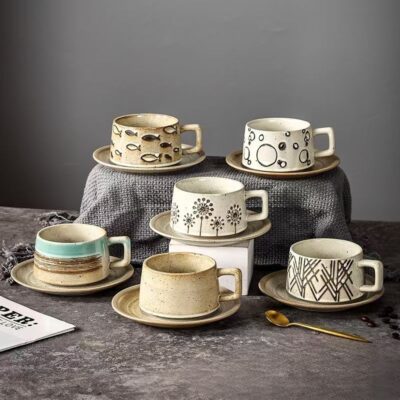

In today’s online retail landscape, a ceramic mug’s packaging can determine whether it reaches the customer in perfect condition—or in pieces. For e-commerce sellers and distributors, designing effective packaging is about balancing protection, presentation, and cost-efficiency. Understanding ISTA testing standards and optimizing freight logistics are essential for global mug suppliers who sell online or ship bulk orders worldwide.
📦 Why E-commerce Packaging Matters
Unlike traditional retail supply chains, e-commerce parcels face multiple handling points—automated sorters, warehouse conveyors, couriers, and end-user delivery. Mugs are particularly fragile due to their rigid body and protruding handles. A single impact can cause cracks or microfractures invisible until unpacking.
Working with experienced Ceramic Mug Manufacturers ensures packaging is engineered to withstand these impacts without excessive material waste.
🧪 ISTA Drop Tests: Setting the Safety Benchmark
ISTA (International Safe Transit Association) sets global standards for packaging performance. The most relevant protocols for ceramic mugs include:
-
ISTA 1A / 2A: Basic drop and vibration tests for individual parcels.
-
ISTA 3A: Simulates parcel delivery through complex distribution systems, including free-fall drops, compression, and random vibration.
Passing ISTA 3A ensures that a package can survive real-world logistics networks such as FedEx, UPS, or Amazon fulfillment. Mugs are tested in both primary (individual box) and secondary (master carton) packaging configurations.
Factories producing ceramic mugs wholesale often conduct these tests in-house or with third-party labs to verify compliance and minimize customer claims.
🧱 Inner Packaging: First Line of Defense
The inner layer is critical for shock absorption and spacing. The best practices include:
-
Individual corrugated compartments to prevent mug-to-mug contact.
-
Die-cut inserts or pulp trays for handle protection.
-
Bubble sleeves or air-column bags to cushion impacts.
-
Reinforced base and lid structure to prevent compression damage.
Lightweight materials are now preferred to reduce dimensional weight (DIM) charges in air freight while maintaining ISTA compliance.
🪶 Outer Carton Design: Balancing Strength and Cost
Outer cartons must withstand stacking pressure and lateral impacts. Double-wall corrugated boxes (5-ply) are standard for mugs shipped internationally. Key parameters include:
-
Bursting strength: Minimum 200 lbs/in² for standard export cartons.
-
Edge crush test (ECT): 44 or higher for multi-tier stacking.
-
Water-resistance coating: Especially for humid or sea freight environments.
Suppliers offering e-commerce-ready packaging often include printed handling marks and barcode zones to streamline fulfillment processes.
🚚 Freight Optimization and CBM Efficiency
Packaging design directly affects freight cost. Reducing carton volume even by 5–10% CBM (cubic meter) can translate into major savings for importers. Optimized packaging strategies include:
-
Nested stacking: Designing mug shapes and handle orientation to interlock during packing.
-
Custom partition sizing: Adjusting inner compartments for tighter fits.
-
Lightweight dividers: Replacing foam with recycled cardboard inserts.
-
Pallet configuration planning: Maximizing carton counts per pallet while staying within weight limits.
Working with experienced Ceramic Mugs Wholesale suppliers helps synchronize packaging design with freight planning—cutting costs without compromising protection.
🌍 Sustainability and Material Choices
Eco-friendly packaging is not only good for the planet—it’s now a purchasing requirement for many major retailers. Modern factories use FSC-certified cardboard, soy-based inks, and recyclable air cushions. Some brands also experiment with molded pulp trays made from sugarcane fiber or recycled paper to replace EPS foam.
Balancing protection with sustainability demonstrates brand responsibility while meeting global environmental standards such as EPR (Extended Producer Responsibility) and EU Packaging Directive 94/62/EC.
💡 Labeling, Barcoding, and Branding
E-commerce packaging must serve both logistics and marketing functions. Buyers increasingly request custom-printed cartons featuring logo marks, QR codes, and SKU information. Branding the unboxing experience helps strengthen consumer engagement—especially for gift and subscription models.
Clear barcodes, handling symbols, and directional arrows reduce warehouse errors, ensuring mugs are handled correctly throughout the journey.
🧾 Quality Control and Drop Validation
Before full-scale production, factories perform pilot shipment simulations. Packages are dropped from standard heights (usually 80–100 cm) across six orientations to identify weak points. Results are logged in test reports to validate packaging performance.
Regular carton compression tests and vibration table simulations further ensure that structural integrity remains consistent across multiple production batches. This data-driven approach minimizes transit damage rates below 0.5% per container—an essential metric for global distributors.
🏁 Final Thoughts
Great e-commerce packaging combines engineering precision, aesthetic appeal, and cost efficiency. Passing ISTA tests and optimizing freight volume reduces losses and enhances brand credibility. For importers, the right packaging strategy protects margins and ensures customer satisfaction long after delivery.
By partnering with professional ceramic mugs wholesale suppliers, businesses can implement tested, sustainable, and logistics-optimized packaging systems—ensuring every mug arrives safely and beautifully at its final destination.